
WHAT IS PROSCIUTTO?
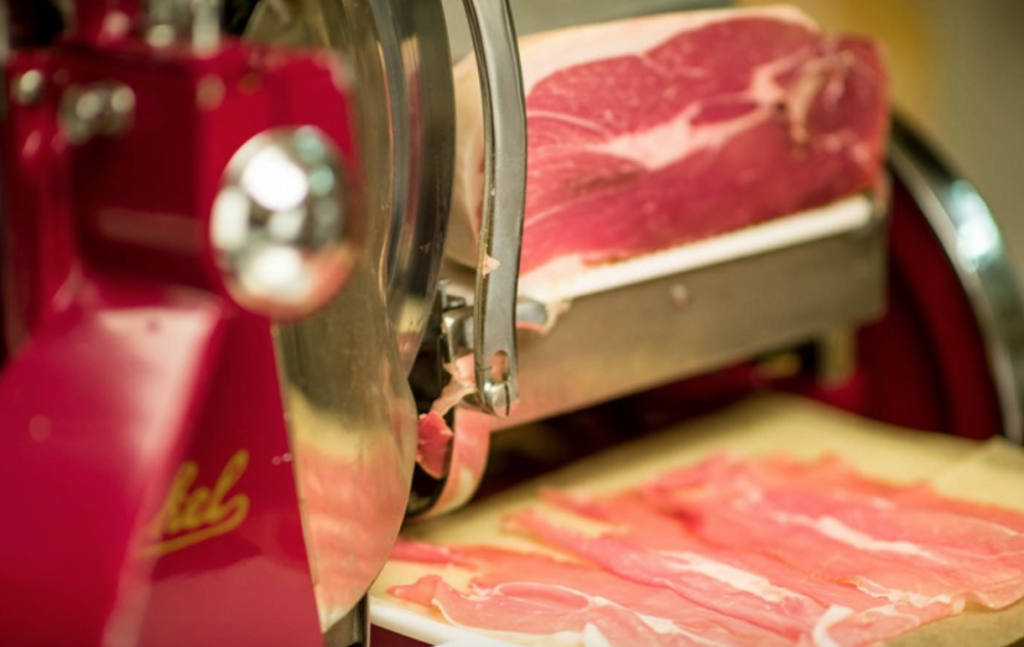
You’ve been eating it for years and have always enjoyed that sweet, soft, buttery goodness. But, what is prosciutto exactly?
What is Prosciutto?
The word prosciutto, which translates to “ham” in Italian, is made only from the hind legs of pigs and is aged during a dry-curing process. There are typically two types of prosciutto: prosciutto cotto, which is cooked, and prosciutto crudo, which is uncooked, yet cured.
Production and the Curing Process
The quality of prosciutto is based on the curing process, region and strict quality controls that go into the production. Curing prosciutto originated in Italy thousands of years ago and is just one of the many factors that set Salumi Toscano Prosciutto apart from other prosciutti.
What Makes Prosciutto Different?
With all the different types of pork sold in stores and restaurants, it’s understandable if you’re confused about what separates prosciutto, pancetta, bacon or other cured meats. Here’s a quick breakdown:
- Salumi Toscano Prosciutto: 100% natural cured ham without any additives, preservatives, hormones, gluten or coloring agents.
- Other Prosciutti: There is American prosciutto, Jamón from Spain (Serrano or Iberico) as well as other Italian prosciutti, such as prosciutto di San Daniele. All of these have unique flavors and textures from the regions where they’re produced.
- Culatello: Made from the loin of the hind leg and cured in a beef or hog bladder in moist cellars. Only one producer is allowed to export it from Italy to the U.S.
- Speck: Made from the pigs hind legs, slightly smoked with a thin salt crust.
- Bacon & Pancetta: Made from pork belly and need to be cooked before eating.
The Salumi Toscano Prosciutto Curing Process
Ever wonder how to make prosciutto? Or, why making Salumi Toscano Prosciutto is different than other types of prosciutto?
Step One: Salting
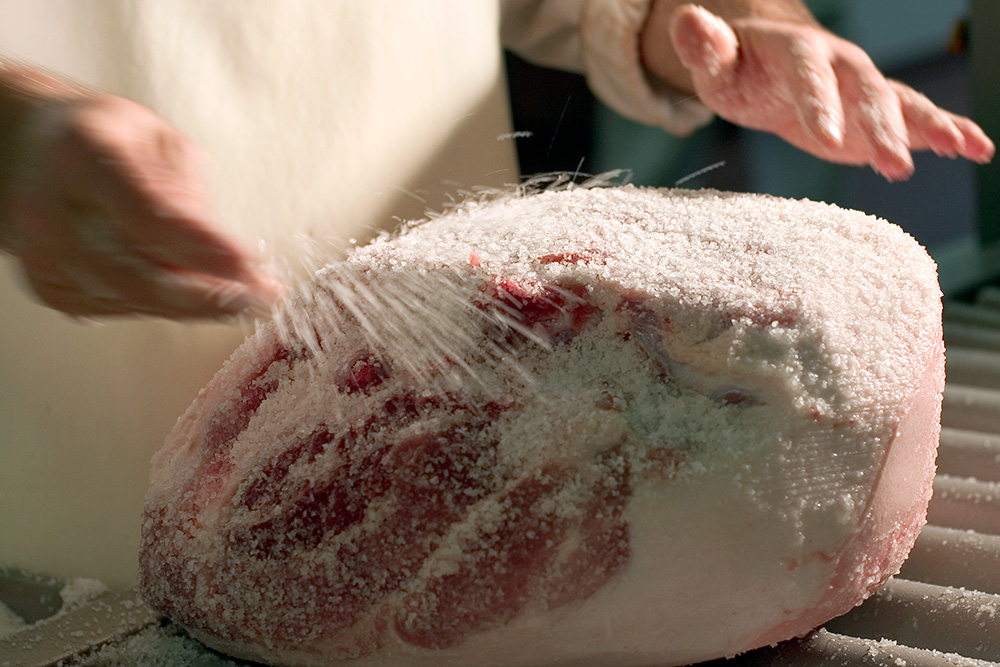
Next, salting is completed by hand in the traditional manner, by the salt master, who uses only the minimal amount of salt necessary. This makes Salumi Toscano Prosciutto taste less salty than other cured hams. The only “ingredients” added to the pork during production are the highest quality salt, air and time.
The leg is then refrigerated at a temperature ranging from 34°F to 39°F, with a humidity level of approximately 80% for about a week and gets a second thin coating of salt which is left on another 15 to 18 days, depending on the weight of the leg. Salt is the only preservative used in the processing method; no chemical elements are allowed.
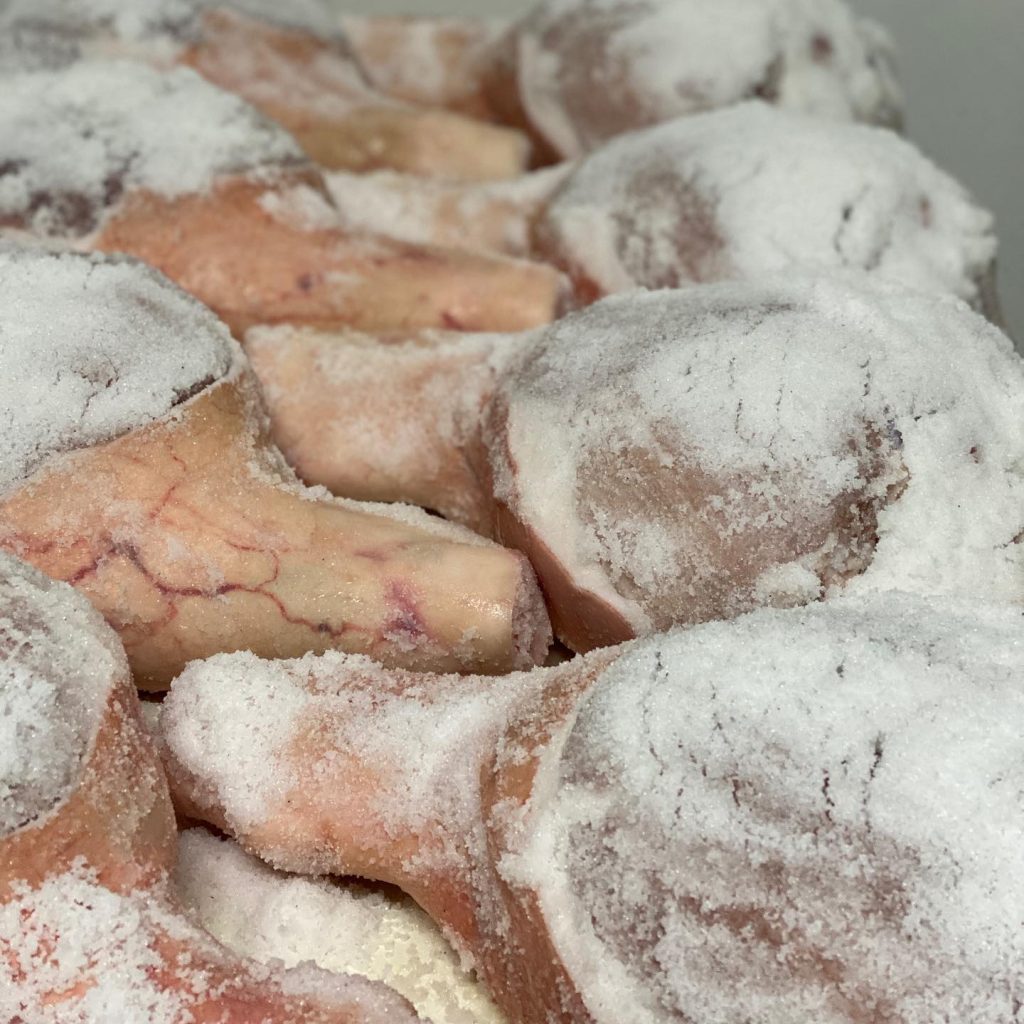
Step Two: Resting + Salt Absorption
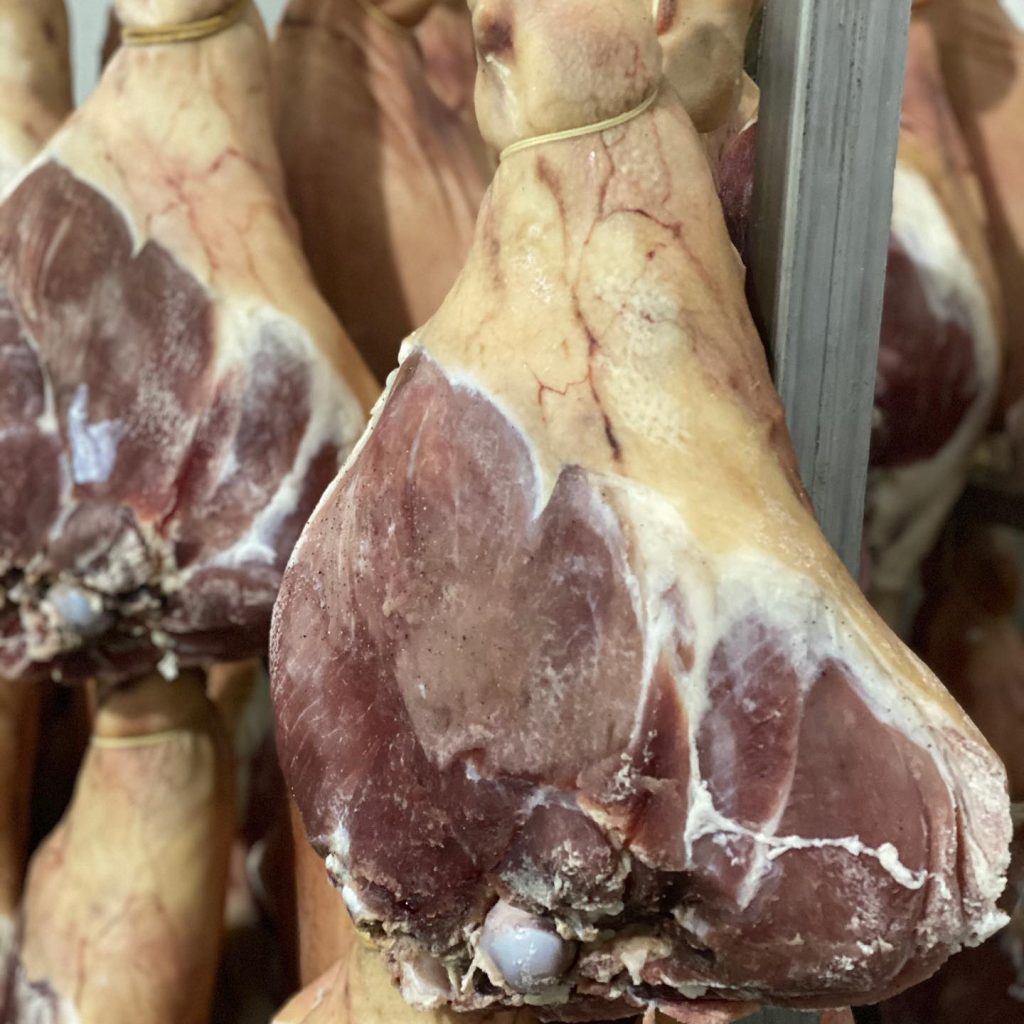
Next, the hams hang for a period ranging between 60 and 90 days in refrigerated, humidity-controlled rooms, to ensure the salt properly absorbs into the meat.
Step Three: Washing
The hams are then washed with warm water and brushed to remove excess salt and impurities, then hung in drying rooms for a few days.
Step Four: Initial Curing
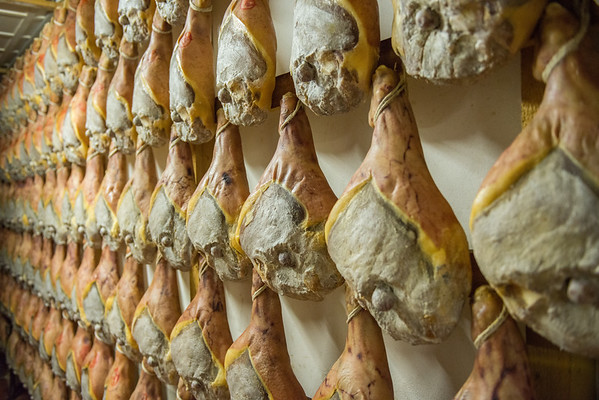
Now the hams are hung on frames in well ventilated rooms with large windows that are opened when the outside temperature and humidity are favorable; this allows for a constant and gradual drying of the hams. Connoisseurs believe that this period is critical to the development of Salumi Toscano Prosciutto distinctive flavor. By the end of this phase, which lasts about three months, the exposed surface of the meat has dried and hardened.
Step Five: Lard Layering

The exposed surfaces of the hams are then softened with a mixture of lard, salt and pepper to prevent the external layers from drying too quickly.
Step Six: Final Curing
In the seventh month, the ham is transferred to the “cellars,” rooms with less air and light, and hang on racks until the curing is completed. By law Salumi Toscano Prosciutto is cured at least 400 days (starting from date of first salting), and some may be cured as long as 2 years.
